Biophilic Cladding and Acoustics: Designing for Health and Wellbeing
The Convergence of Nature, Materiality, and Sound
As buildings become denser and more technologically driven, the quality of interior environments has emerged as a critical determinant of occupant health and wellbeing. Biophilic design—an approach that integrates natural materials, textures, and sensory experiences into the built environment—has gained increasing relevance within architecture and interior design. When applied to cladding systems and acoustic treatments, biophilic principles offer a dual opportunity: enhancing psychological wellbeing while simultaneously improving acoustic comfort in interior spaces.¹
Biophilic Design Principles in Architectural Cladding
Natural Materials and Sensory Connection
Biophilic cladding systems often incorporate materials such as timber, wood wool, cork, and mineral-based composites that retain a visible connection to natural origins. These materials introduce tactile warmth, visual variation, and organic texture, all of which contribute to reduced stress and improved cognitive performance. Research in environmental psychology has shown that exposure to natural materials can positively influence mood and perceived comfort, reinforcing the value of biophilic cladding beyond aesthetics alone.¹
Visual Complexity and Pattern Variation
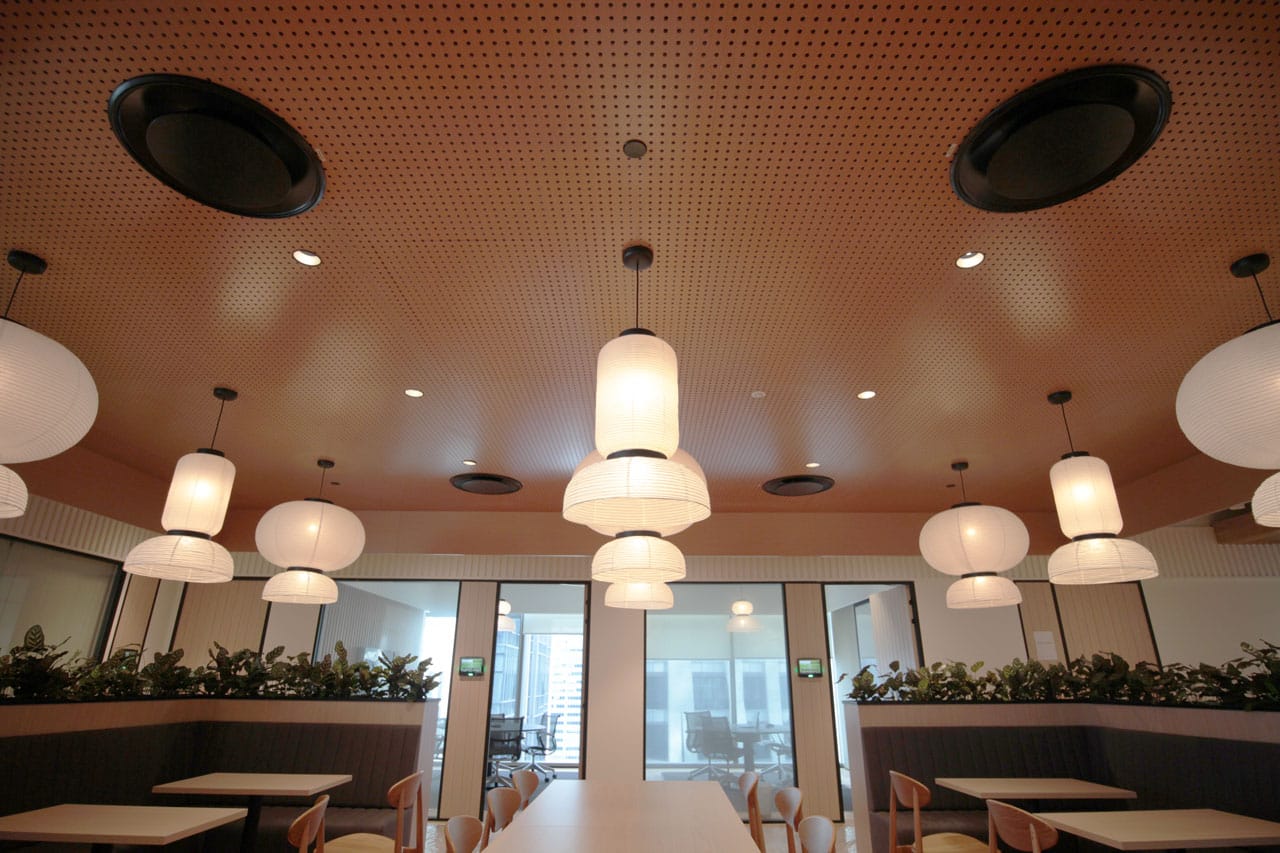
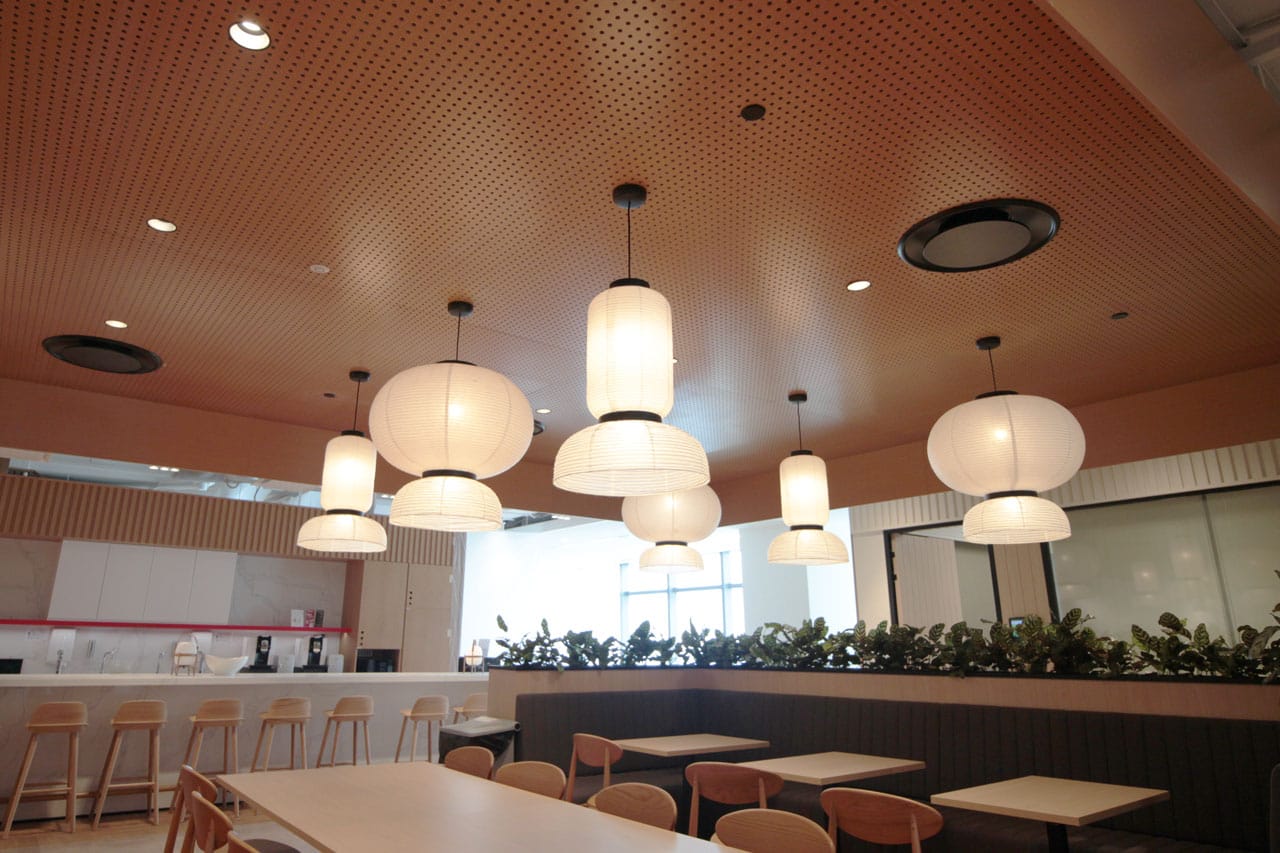
Unlike uniform synthetic surfaces, biophilic cladding frequently employs irregular patterns, grain variation, and layered compositions that mirror natural environments. This visual complexity supports cognitive engagement without overstimulation, aligning with evidence that humans respond positively to fractal-like patterns found in nature. In acoustic wall and ceiling applications, textured cladding surfaces also assist in diffusing sound, reducing harsh reflections while maintaining visual interest.
Material Authenticity and Perceived Wellbeing
Authentic material expression—where finishes reveal genuine texture rather than imitative prints—plays a critical role in biophilic effectiveness. Studies suggest that occupants can distinguish between natural and artificial representations, with authentic materials generating stronger restorative responses. In acoustic design, this authenticity reinforces a sense of environmental quality, contributing to occupant satisfaction in workplaces, education facilities, and healthcare environments.²
Acoustic Performance as a Component of Biophilic Comfort
While biophilic design is often associated with visual and tactile qualities, acoustic comfort is equally essential to perceived wellbeing. Excessive reverberation and background noise have been linked to increased stress, reduced concentration, and lower productivity. Integrating sound-absorptive cladding materials enables designers to address acoustic performance while preserving a natural aesthetic, supporting holistic interior comfort rather than isolated sensory improvements.³
Material Systems for Biophilic Acoustic Cladding
Wood Wool and Mineral-Based Panels
Wood wool acoustic panels exemplify the synergy between biophilic materiality and acoustic performance. Composed of mineral-bound wood fibres, these panels offer high sound absorption across mid and high frequencies while maintaining breathability and moisture regulation. Their textured surface contributes to sound diffusion, while the visible wood fibres reinforce a natural visual language suitable for both walls and ceilings in occupied spaces.³
Timber Slats and Perforated Natural Panels
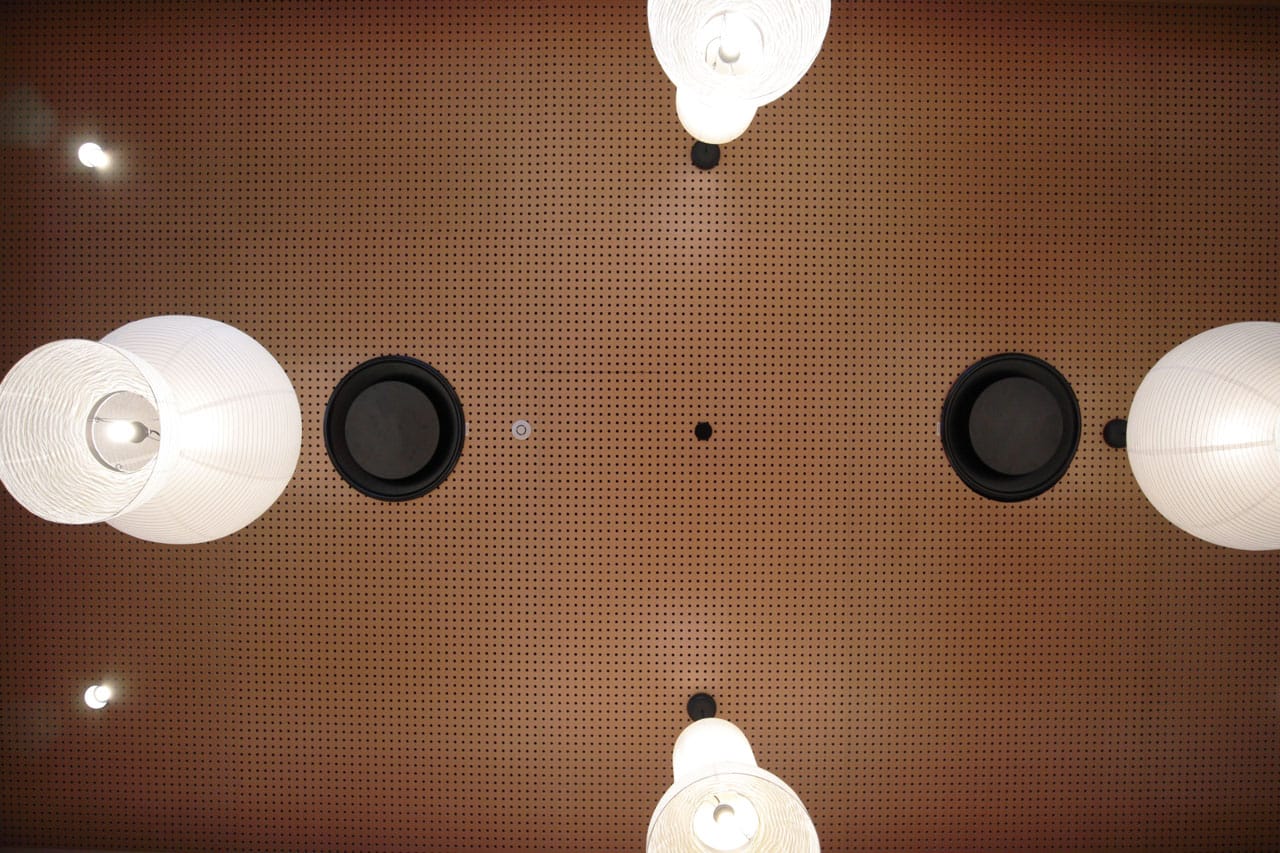
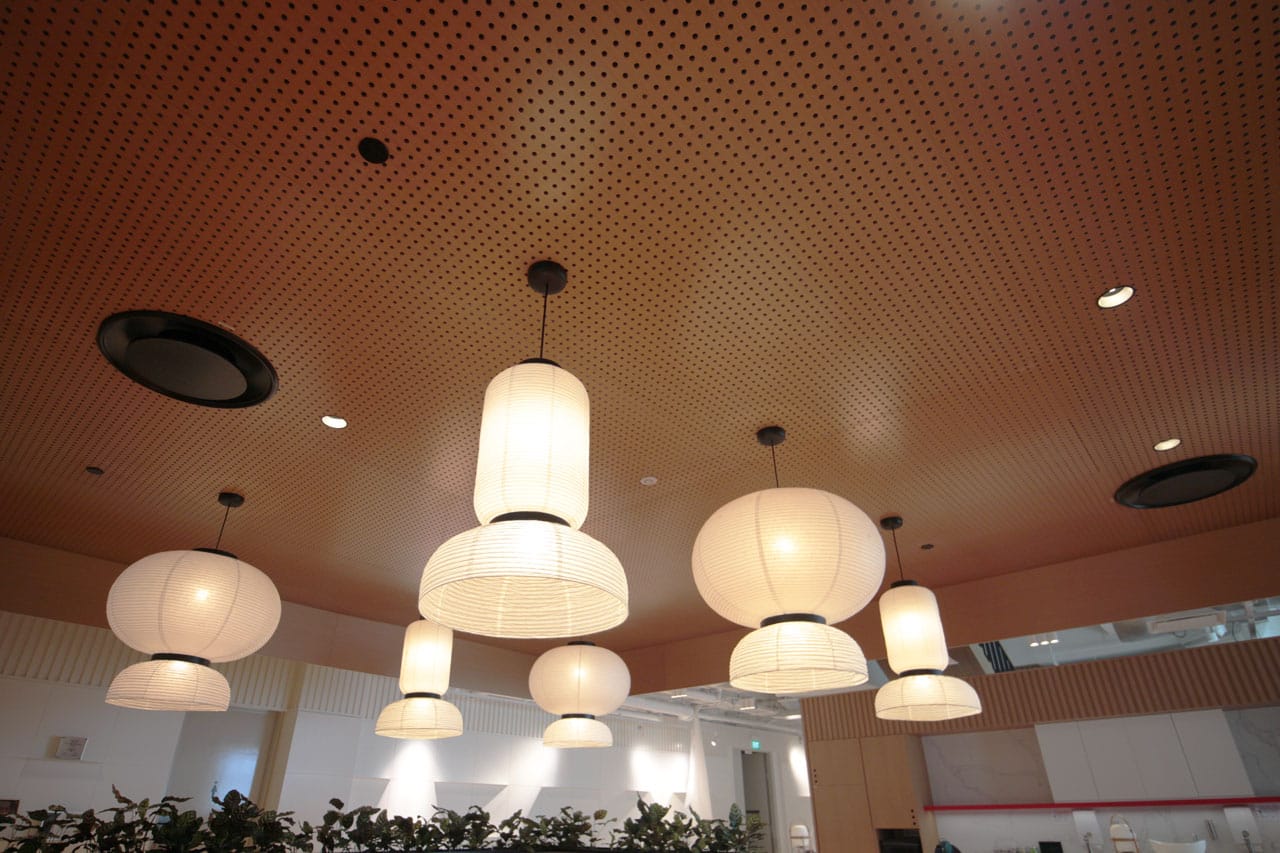
Timber slat systems and perforated wood panels combine linear natural forms with engineered acoustic functionality. When paired with backing absorptive layers, these systems manage reverberation while allowing designers to express rhythm, depth, and shadow—key elements of biophilic spatial experience. Such systems are particularly effective in open-plan interiors, where acoustic zoning and visual continuity must coexist.⁴
Health, Sustainability, and Indoor Environmental Quality
Low-Emission Materials and Indoor Air Health
Biophilic acoustic cladding is most effective when paired with low-emission material strategies. Natural materials with minimal chemical treatment contribute to improved indoor air quality, reducing volatile organic compound (VOC) exposure. Health-focused building frameworks increasingly emphasise material emissions alongside acoustics, recognising that sensory comfort is inseparable from environmental health.⁵
Alignment with Wellbeing-Centred Building Standards
Certification frameworks such as the WELL Building Standard recognise acoustics, material health, and access to nature as interconnected performance criteria. Biophilic acoustic cladding systems support these objectives by addressing sound comfort while reinforcing natural sensory cues. By integrating acoustic performance with biophilic intent, designers can align spatial outcomes with measurable wellbeing benchmarks rather than relying on subjective comfort alone.⁶
Designing for Long-Term Wellbeing Through Integrated Systems
Biophilic cladding and acoustic design represent a shift toward interiors that prioritise human experience alongside technical performance. By combining natural materials with engineered acoustic solutions, designers can create spaces that support psychological restoration, acoustic comfort, and environmental responsibility in equal measure. The effectiveness of these systems lies not in isolated features, but in their integration—where material authenticity, sound control, and health considerations reinforce one another. As evidence-based design continues to shape architectural practice, biophilic acoustic cladding offers a practical pathway for translating research on wellbeing into built form. Through thoughtful material selection and performance-driven detailing, architects can deliver interiors that resonate—both acoustically and experientially—with the people who inhabit them.
References
- Clancy, T. (2007). Military Reconnaissance: A Historical Perspective. Naval Institute Press.
- Wall, R. & Dornheim, M. A. (2000). The Rise of Drones: Unmanned Systems Take Flight. Aviation Week.
- West, N. (2009). Historical Dictionary of Signals Intelligence. Scarecrow Press.
- Polmar, N. (2011). Spyplane: The U-2 History Declassified. Zenith Press.
- Anderson, C. (2013). Drones: The Future of Reconnaissance and Warfare. Wiley.
Share