Cradle to Cradle (C2C) Certified Ceilings: Circular Design in Practice
From Linear Materials to Circular Ceiling Systems
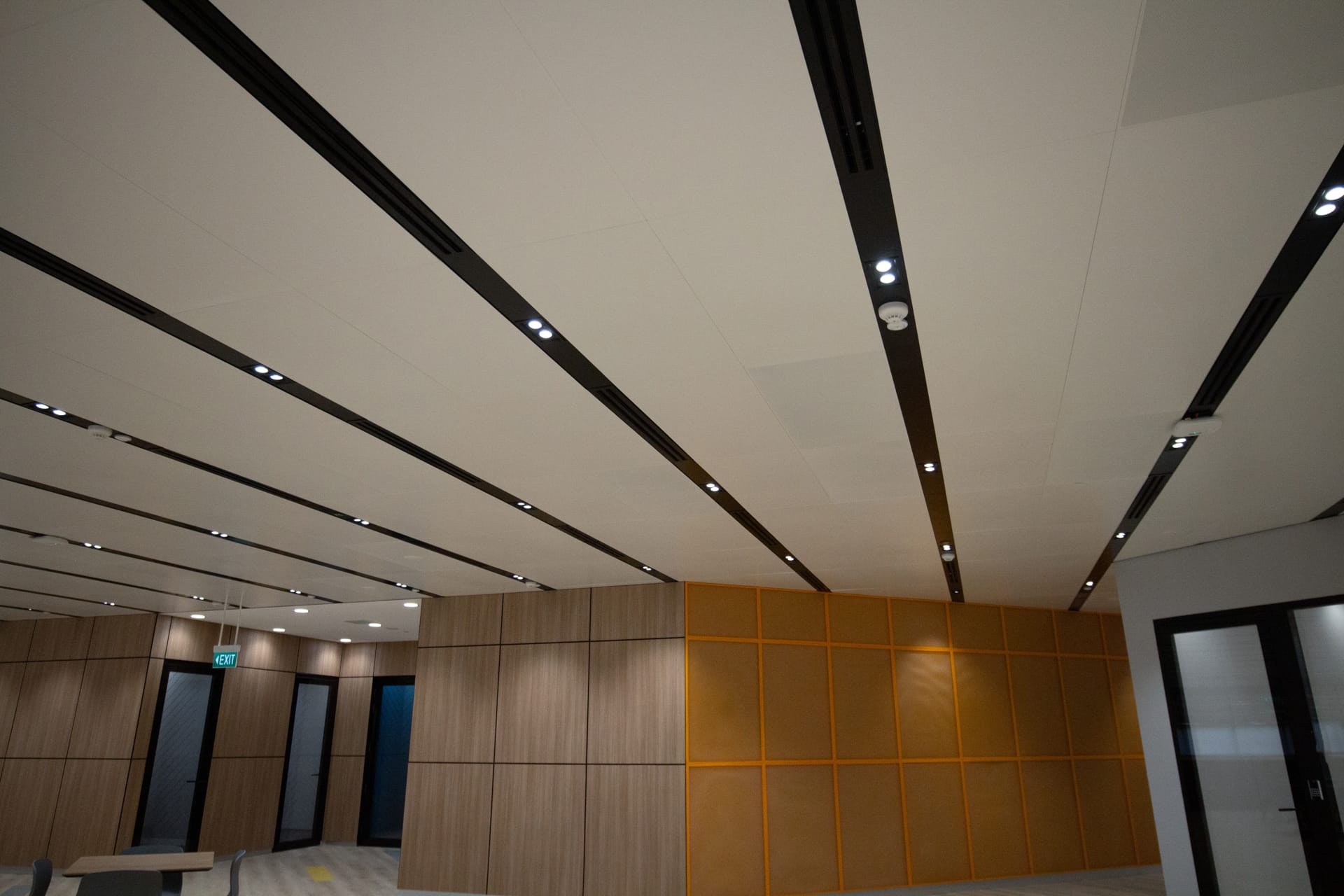
Ceiling systems are often overlooked in discussions of sustainable building design, yet they represent a substantial material footprint across commercial and institutional interiors. Traditionally specified within linear “take–make–dispose” models, ceilings are increasingly being re-evaluated through circular design frameworks that prioritise material health, reuse, and long-term value. Cradle to Cradle (C2C) certification provides a structured methodology for advancing ceiling systems beyond incremental sustainability improvements toward fully circular design strategies grounded in material science and lifecycle responsibility.¹
Foundations of Cradle to Cradle Design
Material Health and Chemical Transparency
At the core of C2C certification is material health. Products are assessed for chemical composition down to 100 parts per million, ensuring that materials do not contain substances harmful to human or ecological health.¹ For ceiling systems, this includes panels, coatings, binders, and suspension components. By eliminating hazardous substances, C2C-certified ceilings support healthier indoor environments while enabling safer material reuse at end of life.
Material Reutilisation and Circular Flow
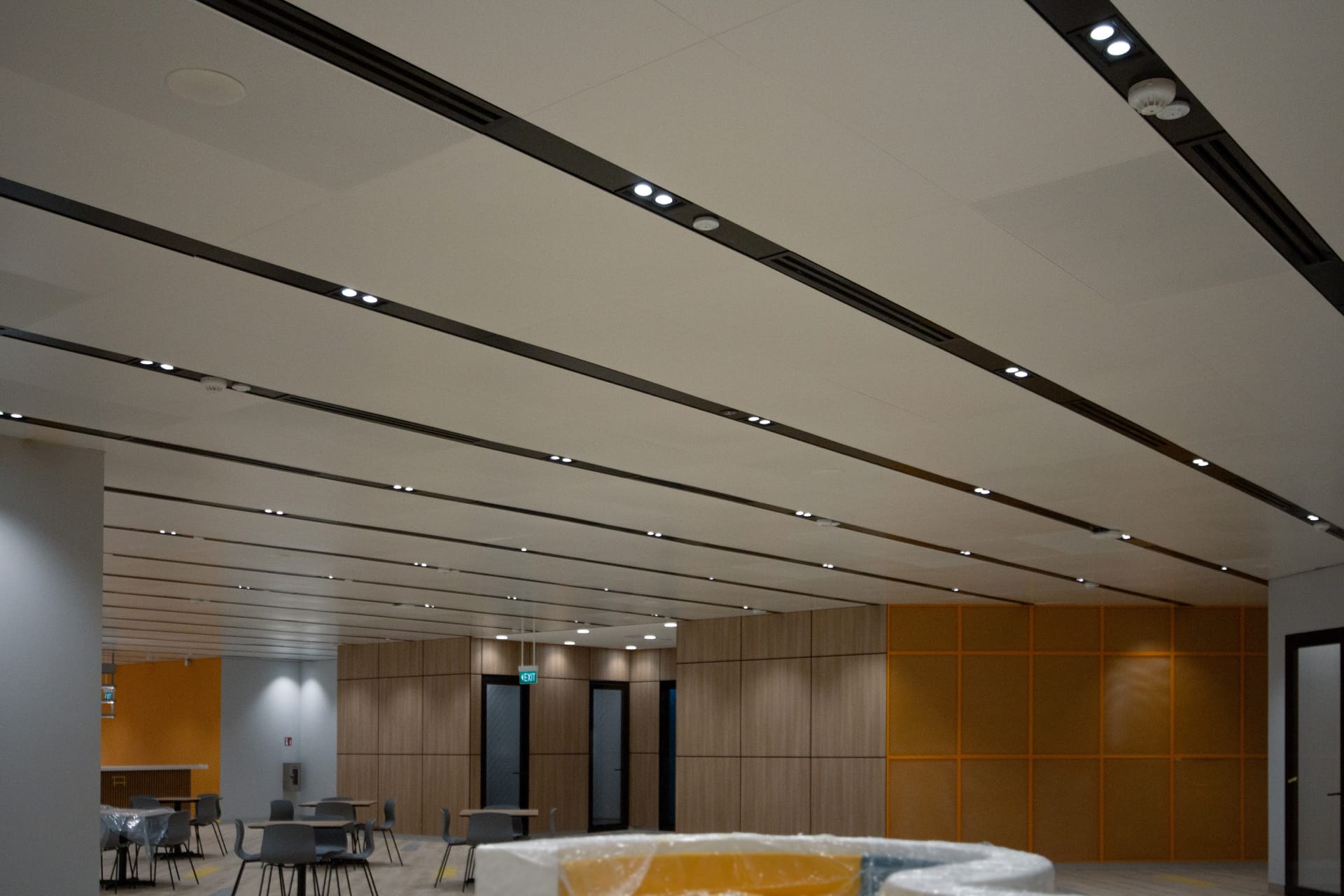
C2C shifts the focus from waste reduction to material reutilisation. Certified ceiling products are designed either for biological cycles—where materials safely return to nature—or technical cycles—where components are recovered and reused in new products.¹ This approach encourages modular ceiling designs, demountable systems, and mono-material strategies that simplify disassembly and recycling, reinforcing circular material flows within the built environment.
Renewable Energy and Carbon Responsibility
C2C certification evaluates whether products are manufactured using renewable energy and whether carbon emissions are managed responsibly. For ceiling systems, this extends sustainability beyond material composition to include manufacturing processes and supply-chain impacts. By prioritising renewable energy use, C2C-certified ceilings contribute to lower embodied carbon and align with broader climate-action goals.²
Applying C2C Principles to Ceiling Systems
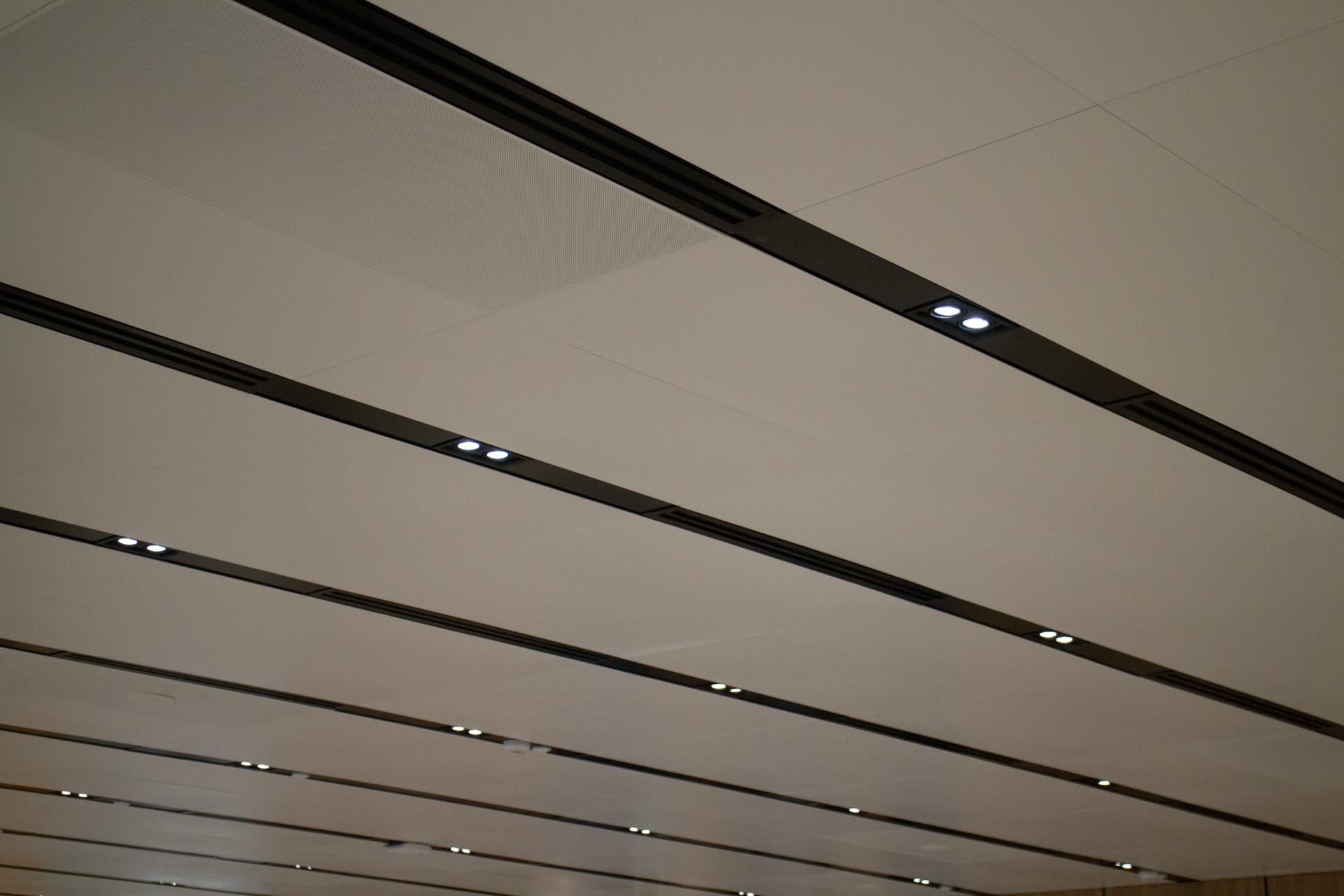
Translating C2C principles into ceiling design requires coordination between manufacturers, designers, and specifiers. Ceiling systems must balance acoustic performance, fire safety, durability, and aesthetics while meeting stringent C2C criteria. This integration demonstrates that circular design is not an abstract concept, but a practical framework capable of delivering high-performance interior systems.¹
Performance Considerations in C2C-Certified Ceilings
Acoustic and Functional Performance
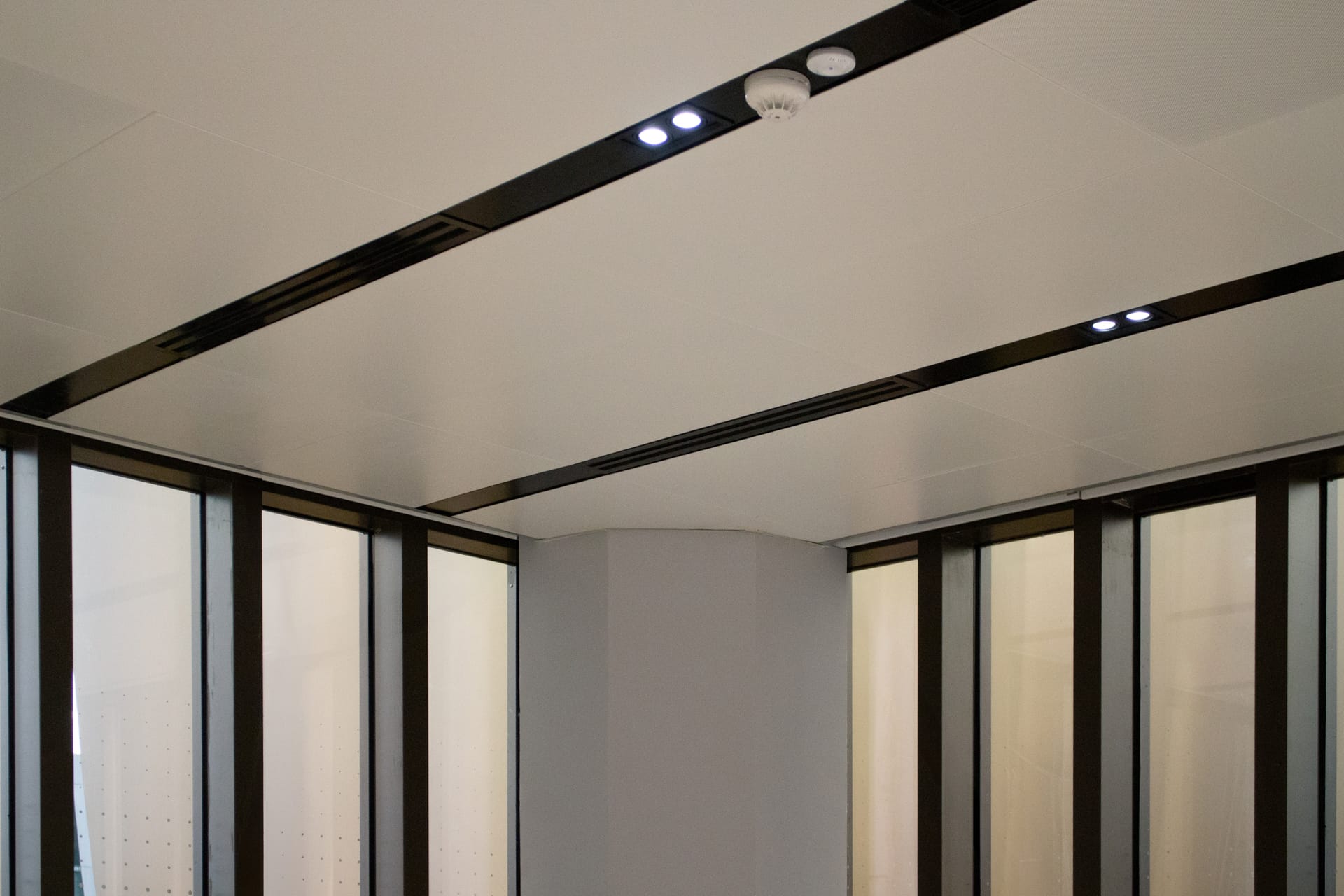
Ceilings play a critical role in managing reverberation and sound control within interior spaces. C2C-certified ceiling panels must therefore achieve acoustic performance targets without relying on materials that compromise material health. Advances in mineral-based and fibre-based panels show that high sound absorption can coexist with circular material strategies, supporting both acoustic comfort and sustainability objectives.³
Durability and Adaptability
Circular ceilings are designed for longevity and adaptability rather than single-use lifespans. Demountable ceiling systems allow panels to be removed, reconfigured, or reused as interior layouts change. This adaptability reduces refurbishment waste and supports long-term value retention—key principles in circular design and C2C certification.²
Alignment with Broader Sustainability Frameworks
Synergies with LEED and Circular Economy Goals
While C2C is a standalone certification, its principles align closely with green building frameworks such as LEED v4.1. C2C-certified ceilings can support LEED credits related to material disclosure, responsible sourcing, and lifecycle thinking.⁴ By integrating C2C products into LEED projects, teams can address both circularity and certification requirements through a single material strategy.
Supporting Lifecycle-Based Decision Making
C2C certification encourages designers to consider full product lifecycles rather than upfront performance alone. This aligns with lifecycle assessment (LCA) methodologies increasingly used to evaluate embodied carbon and resource efficiency in buildings.⁵ For ceiling systems, lifecycle-based decision-making reinforces the value of reuse, disassembly, and material recovery as core sustainability strategies.
Embedding Circularity into Interior Architecture
Cradle to Cradle certified ceilings illustrate how circular design principles can be applied meaningfully within interior architecture. By prioritising material health, reuse, renewable energy, and lifecycle responsibility, C2C-certified ceiling systems move beyond conventional sustainability metrics toward regenerative design outcomes. Their value lies not only in reduced environmental impact, but in enabling adaptable interiors, healthier spaces, and resilient material cycles. As the construction industry increasingly shifts toward circular economy models, ceiling systems offer a tangible and scalable opportunity to implement C2C principles in practice—demonstrating that circular design can deliver both technical performance and long-term environmental stewardship.
References
- Cradle to Cradle Certified®. (n.d.). Cradle to Cradle Certified®: A framework for assessing circularity and sustainability performance of materials and products. Circular Economy European Platform.
https://circulareconomy.europa.eu/platform/en/good-practices/cradle-cradle-certifiedr-standard-assessing-circularity-and-sustainability-performance-materials-and-products - Ellen MacArthur Foundation. (2019). Circular economy principles for the built environment. Ellen MacArthur Foundation.
https://ellenmacarthurfoundation.org/topics/circular-economy-introduction/overview - Kuttruff, H. (2009). Room acoustics (5th ed.). Springer.
https://link.springer.com/book/10.1007/978-3-540-48830-9 - U.S. Green Building Council. (2023). LEED v4.1 building design and construction. U.S. Green Building Council.
https://www.usgbc.org/leed/v41 - U.S. Environmental Protection Agency. (2017). Life-cycle assessments (LCAs) for sustainability. U.S. Environmental Protection Agency.
https://19january2017snapshot.epa.gov/saferchoice/design-environment-life-cycle-assessments_.html
Share