Fire-Rating Requirements for Acoustic Panels in High-Occupancy Buildings
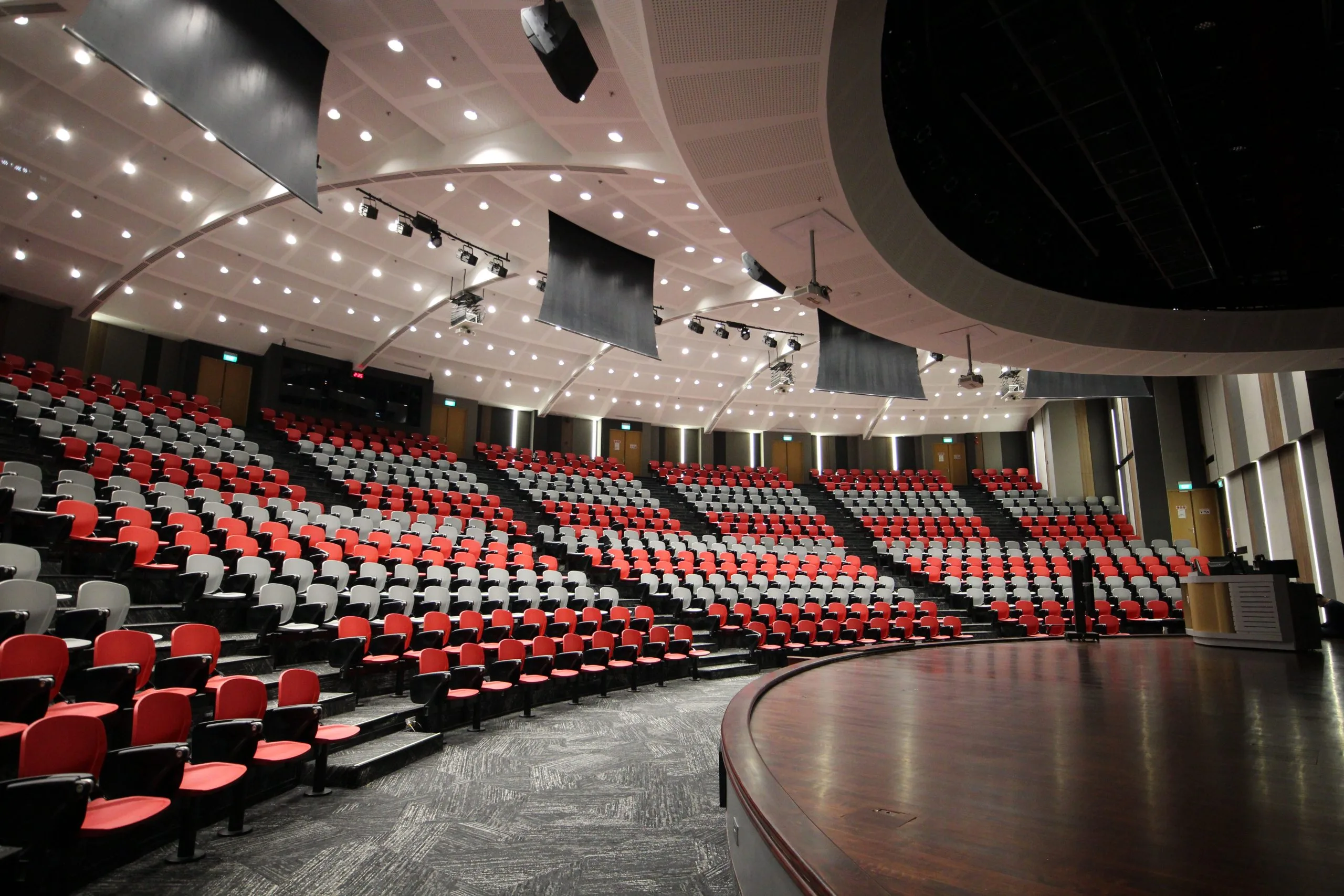
Fire Safety as a Critical Acoustic Design Constraint
In high-occupancy buildings such as offices, schools, healthcare facilities, transport hubs, and assembly spaces, acoustic comfort must be achieved without compromising life safety. Acoustic panels—often composed of porous, fibrous, or composite materials—interact directly with fire performance requirements that govern flame spread, smoke development, and combustibility. As regulations tighten globally, understanding fire-rating requirements has become essential for architects and acoustic consultants specifying sound-absorbing systems in dense, people-centric environments.¹
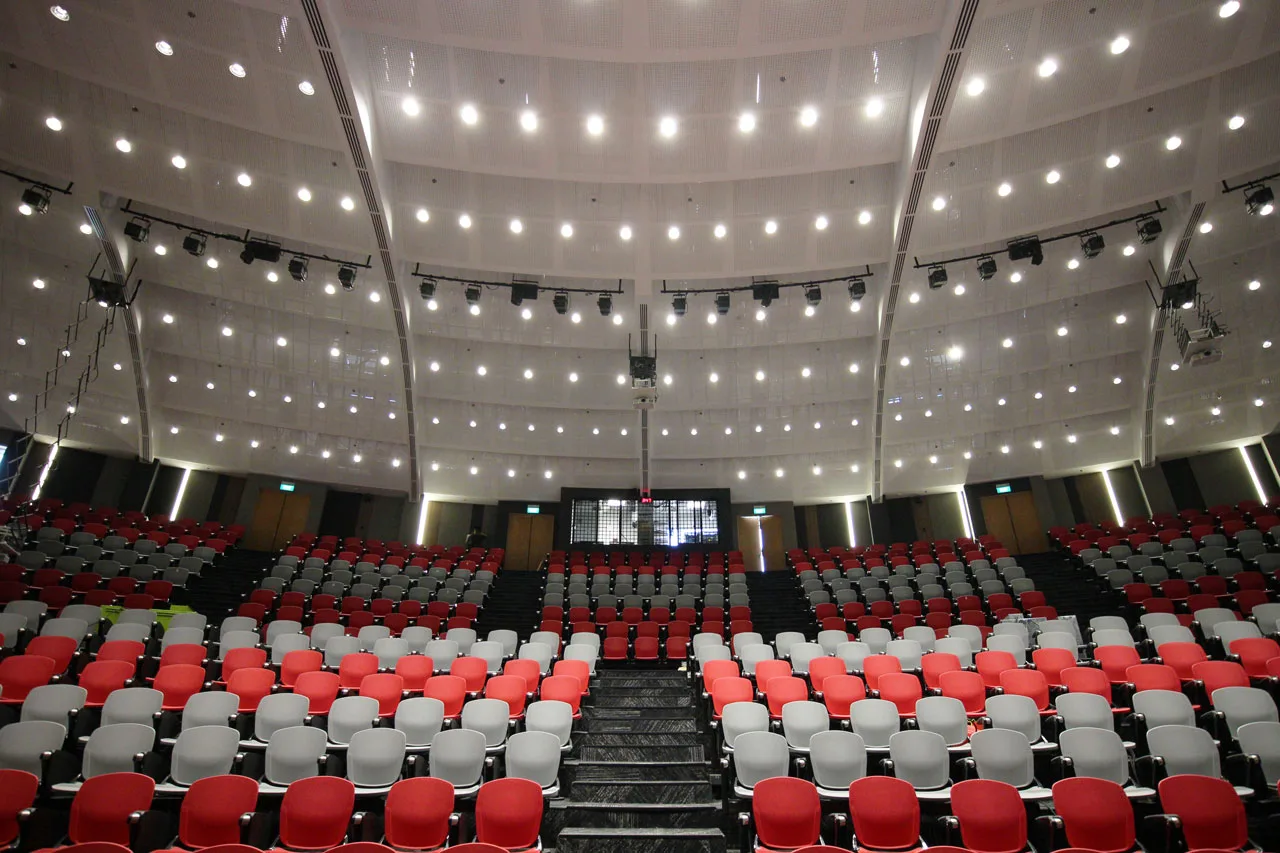
Fundamental Fire-Rating Standards for Acoustic Panels
Reaction-to-Fire Classification Systems
Fire performance of acoustic panels is typically assessed through reaction-to-fire testing, which evaluates how materials contribute to fire growth rather than their structural resistance. In Europe, EN 13501-1 classifies products from A1 (non-combustible) to F based on flame spread, heat release, smoke production, and flaming droplets.² In North America, ASTM E84 and UL 723 provide comparable flame spread and smoke developed indices. These systems allow regulators and designers to establish minimum safety thresholds for interior finishes in high-occupancy settings.
Fire Ratings Versus Fire Resistance
It is critical to distinguish between fire rating and fire resistance. Acoustic panels are typically non-loadbearing interior elements and are therefore assessed for reaction-to-fire rather than fire resistance duration. While a wall assembly may be rated for one or two hours of fire resistance, the acoustic treatment applied to it must meet separate surface spread requirements.³ Misunderstanding this distinction can lead to non-compliant specifications even when primary assemblies meet code.
Regulatory Thresholds in High-Occupancy Spaces
High-occupancy buildings impose stricter fire performance thresholds due to increased evacuation risk and occupant density. Many codes require Class A (ASTM) or B-s1,d0 (EN 13501-1) performance for wall and ceiling finishes in corridors, atria, and assembly spaces.² Acoustic panels installed in these areas must demonstrate low flame spread and minimal smoke production, reinforcing the importance of certified test data during specification.
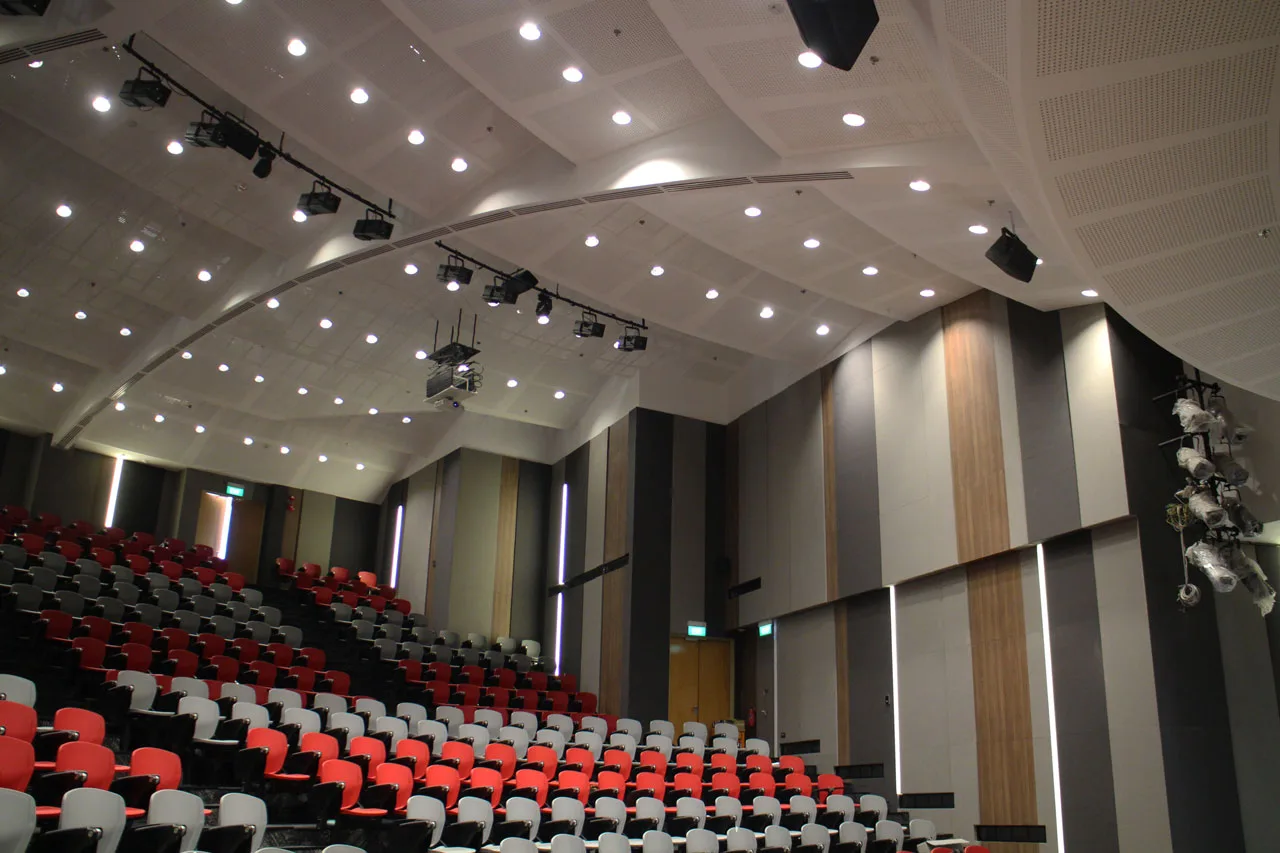
Material Composition and Fire Performance
The fire behaviour of acoustic panels is closely linked to their material composition. Mineral-based panels, such as stone wool or glass wool systems, often achieve high fire classifications due to inherent non-combustibility.³ Timber-based, polyester, or fabric-wrapped panels typically require fire-retardant treatments, surface coatings, or composite construction to meet regulatory thresholds. Understanding these material-specific characteristics enables more informed decisions during early design stages.
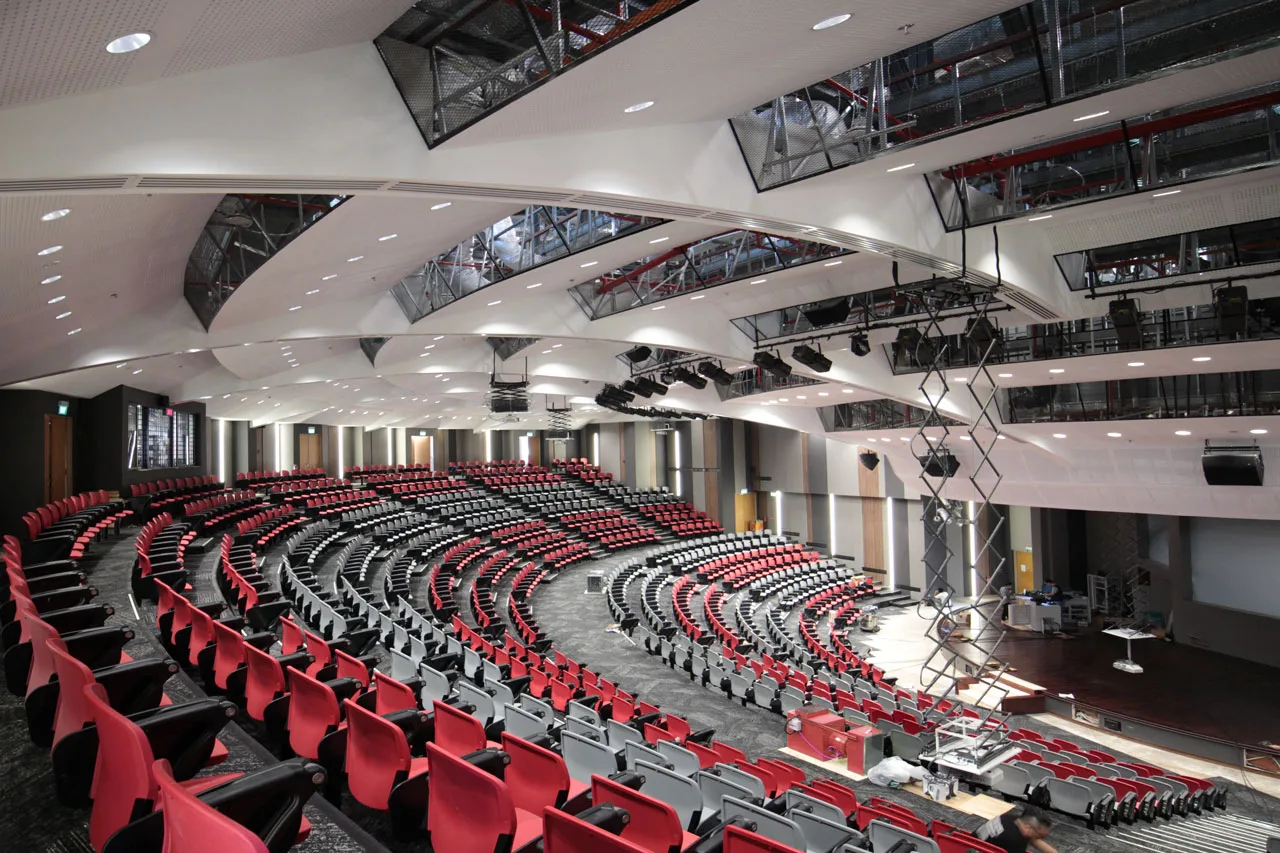
Design Strategies for Compliant Acoustic Integration
Fire-Retardant Treatments and System Testing
Many acoustic panels rely on fire-retardant additives, impregnations, or surface finishes to achieve compliance. While these treatments can significantly improve fire performance, certification must apply to the complete tested system rather than individual components.² Panels tested without backing substrates, adhesives, or mounting systems may not reflect real-world installations, making full-assembly test reports essential for compliance in high-occupancy buildings.
Ceiling Versus Wall Applications
Fire requirements often differ between ceiling and wall applications due to heat accumulation and smoke behaviour. Ceiling-mounted acoustic panels may be subject to stricter classifications, particularly in spaces with exposed structure or mechanical services.³ Designers must verify that the fire classification is valid for the intended orientation and installation method, as some products achieve different ratings depending on mounting configuration.
Alignment with Codes and Building Certification Frameworks
Building Codes and Local Authority Approval
Local building codes typically reference international standards while imposing jurisdiction-specific requirements. Authorities having jurisdiction (AHJs) may require third-party test reports, classification summaries, or declarations of performance for acoustic panels used in high-occupancy areas.¹ Early coordination with fire consultants and code officials helps prevent late-stage redesigns or material substitutions.
Fire Performance Within Sustainable Design
Fire-rated acoustic panels increasingly intersect with sustainability objectives, including low-VOC emissions and material transparency. Certification systems such as LEED reward products that combine fire safety with indoor environmental quality performance.⁴ Achieving both fire compliance and environmental responsibility requires careful selection of materials, binders, and surface finishes that do not introduce hazardous emissions while meeting reaction-to-fire thresholds.
Balancing Acoustic Comfort and Life Safety
Fire-rating requirements fundamentally shape how acoustic panels are designed, tested, and specified in high-occupancy buildings. While acoustic performance remains essential for occupant comfort, speech intelligibility, and wellbeing, it cannot be pursued in isolation from life-safety obligations. By understanding reaction-to-fire classifications, material behaviour, and regulatory thresholds, architects and consultants can integrate acoustic treatments that enhance interior environments while maintaining rigorous fire safety standards. As building typologies grow more complex and expectations for performance increase, fire-rated acoustic panels will continue to play a critical role in delivering spaces that are safe, comfortable, and compliant—demonstrating that effective acoustic design and fire safety are not competing priorities, but complementary responsibilities.
References
- European Committee for Standardization. (2018). Fire classification of construction products and building elements – EN 13501-1 (overview). RISE Research Institutes of Sweden.
https://www.ri.se/en/expertise-areas/expertises/european-fire-classification - ASTM International. (2023). Standard test method for surface burning characteristics of building materials (ASTM E84). ASTM International.
https://www.astm.org/e84.html - Egan, M. D. (2007). Architectural acoustics. J. Ross Publishing.
https://www.globalspec.com/reference/41080/203279/architectural-acoustics - National Fire Protection Association. (2022). Codes and standards for fire safety in buildings. National Fire Protection Association.
https://www.nfpa.org/codes-and-standards - U.S. Green Building Council. (2023). LEED v4.1 overview. U.S. Green Building Council.
https://www.usgbc.org/leed/v41 - International Code Council. (2021). International building code — interior finish requirements overview. International Code Council.
https://www.iccsafe.org/products-and-services/i-codes/ibc/
Share