FSC Chain of Custody (CoC) Certification in Timber and Composite Panels

Why Traceability Has Become Central to Material Specification
As sustainability moves from aspiration to obligation in the construction sector, architects and specifiers are increasingly expected to demonstrate not only material performance, but also responsible sourcing. Forest-based products such as timber and wood-derived composite panels carry environmental value, but only when their origins and supply chains are verifiable. FSC Chain of Custody (CoC) certification provides a globally recognised framework for tracking certified material from forest to finished product, enabling transparent, defensible specification in modern construction.¹
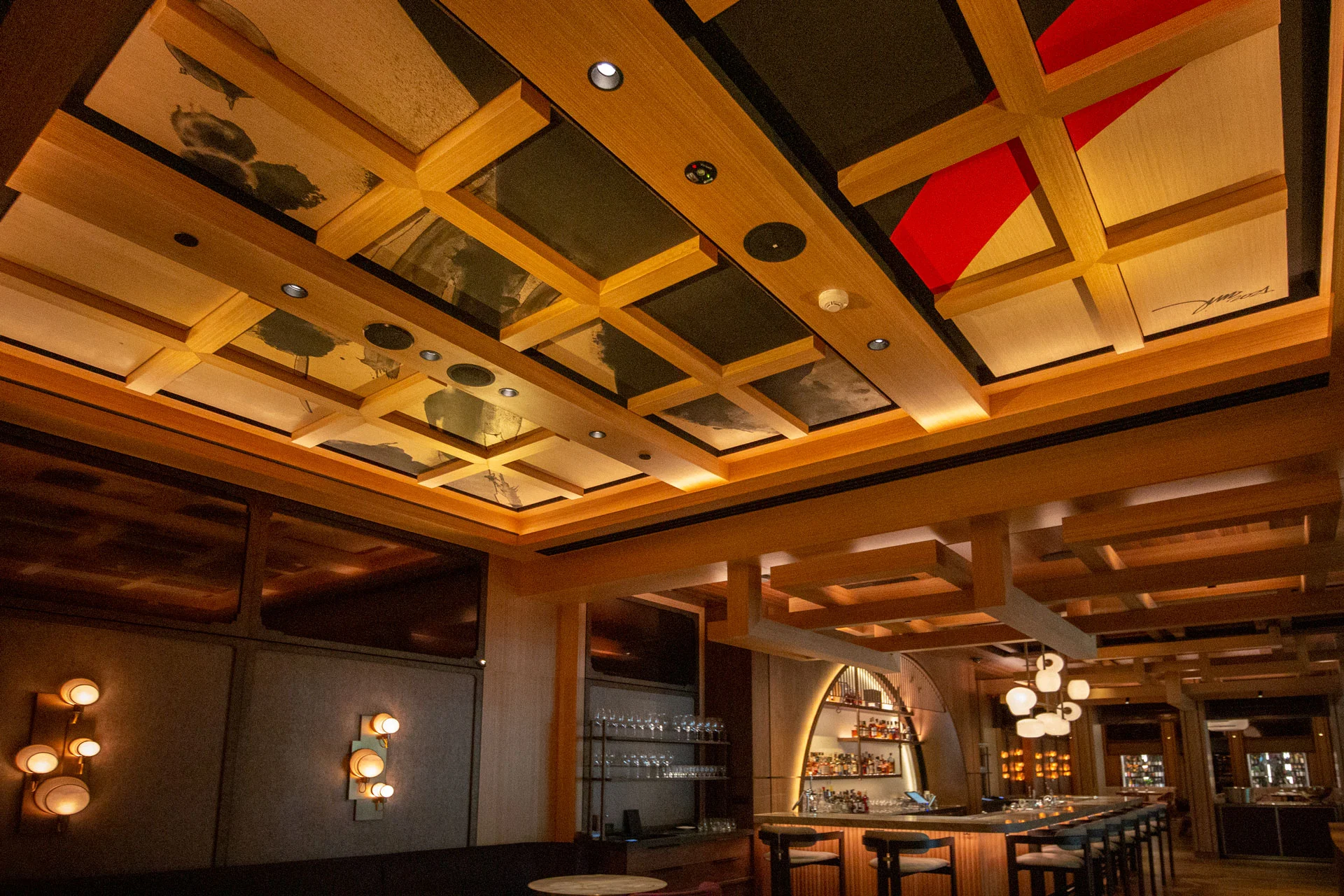
Foundations of FSC Chain of Custody Certification
What FSC Chain of Custody Certification Means
FSC Chain of Custody certification verifies that forest-based materials originate from responsibly managed forests and are tracked through every stage of processing, manufacturing, and distribution. Governed by the Forest Stewardship Council, CoC certification ensures that FSC-certified material is not mixed with uncontrolled or unknown sources without proper controls.² For architects, this traceability transforms timber and composite panels from visually sustainable choices into verifiably responsible materials.
Certified Forests and Responsible Forest Management
At the source of the CoC system is FSC Forest Management certification, which sets requirements for biodiversity protection, workers’ rights, Indigenous land rights, and long-term forest health.¹ CoC certification extends these principles beyond the forest, ensuring that downstream products maintain a documented link to responsibly managed sources. This continuity is critical in preventing greenwashing and maintaining confidence in timber-based construction materials.
Chain Integrity Across Complex Supply Networks
Modern timber and composite panel supply chains often span multiple countries, processors, and distributors. FSC CoC certification establishes documented procedures, audits, and transaction controls that preserve chain integrity across these complex networks.² For composite panels containing wood fibres, veneers, or cores, CoC certification confirms that certified content is accurately quantified and transparently reported.

Application of FSC CoC in Timber and Composite Panels
FSC CoC certification applies to a wide range of building products, including solid timber panels, plywood, MDF, particleboard, and hybrid composite systems. Manufacturers may certify products as FSC 100%, FSC Mix, or FSC Recycled depending on material composition and sourcing.³ This flexibility allows architects to specify certified products across structural, acoustic, and decorative applications while balancing availability, performance, and sustainability objectives.

Verification, Labelling, and Market Transparency
FSC Claims and Product Labelling
FSC-certified products carry specific claims—such as FSC 100%, FSC Mix, or FSC Recycled—that communicate the proportion and type of certified content.³ These labels provide immediate clarity during specification and procurement, allowing architects and contractors to verify compliance without requiring detailed supply-chain analysis. Correct use of FSC claims is strictly regulated to preserve trust and consistency across markets.
Auditing, Compliance, and Risk Mitigation
Organisations holding FSC CoC certification are subject to regular third-party audits that assess purchasing controls, material segregation, record keeping, and labelling practices.² This auditing process reduces the risk of illegal logging, material substitution, and misrepresentation. For construction projects, CoC certification therefore functions as both a sustainability tool and a risk-management mechanism.
Alignment with Green Building Frameworks
FSC CoC and LEED Material Credits
FSC CoC certification plays a significant role in green building rating systems, particularly LEED. In LEED v4 and v4.1, FSC-certified wood contributes to credits related to responsible sourcing and material transparency.⁴ For architects, specifying FSC CoC-certified timber and composite panels supports certification targets while reinforcing due diligence in material selection.
Supporting Circular and Low-Carbon Design Strategies
Beyond certification points, FSC CoC supports broader sustainability strategies by encouraging renewable material use and responsible forest regeneration. When combined with durability, modularity, and end-of-life planning, FSC-certified timber panels can contribute to lower embodied carbon and circular construction models.⁵ This positions FSC CoC as a foundational component of climate-responsive design rather than a standalone credential.
Ensuring Responsible Timber Use in Contemporary Construction
FSC Chain of Custody certification provides architects with a robust, globally recognised framework for verifying the origin and integrity of timber and composite panels. In an industry increasingly defined by accountability, CoC certification bridges the gap between sustainable intent and demonstrable action. By ensuring traceability from forest to finished product, FSC CoC enables architects to specify timber-based materials with confidence—supporting biodiversity protection, ethical supply chains, and long-term material value. As regulatory scrutiny and client expectations continue to rise, FSC CoC certification will remain a critical tool for aligning natural material use with environmental responsibility, risk management, and credible sustainability outcomes in modern construction.
References
- Forest Stewardship Council. (2015). FSC Principles and Criteria for Forest Stewardship (FSC-STD-01-001 V5-2).
- Forest Stewardship Council. (2021). Chain of Custody Certification (FSC-STD-40-004 V3-1).
- Forest Stewardship Council. (2022). FSC Product Classification (FSC-STD-40-004a V2-1).
- U.S. Green Building Council. (2023). LEED v4.1 Building Product Disclosure and Optimization: Sourcing of Raw Materials..
- World Green Building Council. (2019). Bringing Embodied Carbon Upfront: Coordinated Action for the Building and Construction Sector to Tackle Embodied Carbon.
- United Nations Environment Programme & INTERPOL. (2012). Green Carbon, Black Trade: Illegal Logging, Tax Fraud and Laundering in the World’s Tropical Forests.
Share